The New Rules of a Luxury Wardrobe: Why Fewer Pieces and Better Provenance Win
Luxury used to be sold as abundance. More clothes. More logos. More options. More proof that you could afford it. That idea does not feel impressive anymore. It feels dated.
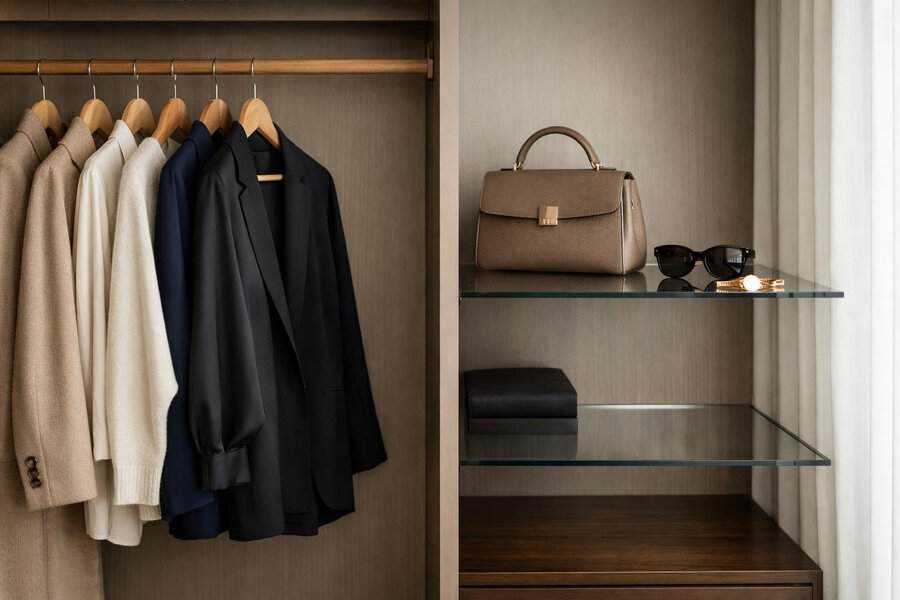
Today, the strongest luxury wardrobes are not the fullest ones. They are the most considered. In a market crowded with trend churn, rising prices, and better-informed shoppers, luxury should mean fewer pieces, better materials, and a story you can stand behind. A modern wardrobe should not be built to show off quantity. It should be built to prove judgment.
That is why provenance now carries real weight. Resale has become essential. And buying less, but buying better, is no longer merely a refined preference. It has become the smarter standard.
Luxury Lost Its Meaning When “More” Became the Goal
For years, luxury fashion borrowed the logic of fast fashion and simply gave it a higher price tag. The cycle stayed the same. Buy often. Refresh constantly. Keep up or fall behind. The only real difference was the cost.
That model weakened the whole point of luxury. If every season demands another wave of purchases, then craftsmanship starts to matter less than novelty. If a closet is stuffed with expensive pieces that rarely get worn, then ownership starts to look more like clutter with a better label.
Consumers have moved on from that mindset. People now ask sharper questions. Is the fabric worth the price? Will this still look right in five years? Does this fit my life, or just the mood of the moment? A luxury purchase without a convincing answer to those questions feels less luxurious than it used to.
That shift is not about deprivation. It is about standards. A smaller wardrobe built with discipline says more about taste than a crowded closet ever could.
Better Pieces Do More Work
A great luxury piece should justify itself in more than one way. It should wear well, style easily, age gracefully, and still feel relevant long after the trend cycle moves on. That is what separates an investment from an impulse buy.
One excellent coat can carry an entire winter wardrobe. One structured bag can sharpen dozens of outfits. One well-cut trouser can move from work to dinner to travel without feeling wrong in any setting. Even smaller details such as over the calf dress socks for men from Southern Scholar can elevate your look when you pair them well. That kind of range matters.
When a piece deserves space in a modern wardrobe, it usually does at least four things well:
- It holds its shape and quality with regular wear.
- It works with multiple outfits, not just one styled moment.
- It feels current without chasing trends.
- It reduces the need for constant replacement.
This is where the conversation becomes practical, not just aesthetic. A wardrobe filled with average pieces creates more noise, more indecision, and more waste. A wardrobe filled with stronger pieces creates clarity. Getting dressed becomes easier because the clothes are doing more of the work.
That is not a small advantage. In the real world, usefulness is part of luxury too.
Provenance Is No Longer a Nice Detail. It Is Part of the Product
Luxury buyers are not just paying for appearance anymore. They are paying for confidence. In a world where counterfeit goods are more convincing and resale is more mainstream, provenance has become part of the value equation.
A beautiful item with no clear history now raises questions. A beautiful item with documentation, condition records, original receipts, packaging, or trusted authentication creates reassurance. That difference matters, especially when the piece is expensive, collectible, or likely to be resold later.
Before buying, a modern shopper should be able to ask:
- Where did this piece come from?
- Can its ownership or authenticity be verified?
- Does it come with supporting records or trusted authentication?
- Will the next buyer trust its story as much as I do?
Provenance is often treated like a background detail. It should not be. In today’s luxury market, it is part of what makes an item feel secure, credible, and worth the spend. Storytelling is nice. Traceability is better.
Resale Has Changed What Deserves a Place in Your Closet
Resale has forced luxury shoppers to think more clearly. Once you know a piece may be sold, traded, or evaluated again later, you stop shopping only for the thrill of the moment. You start thinking about demand, durability, and lasting appeal.
That changes behavior in a useful way. You become more selective. You start noticing which silhouettes hold value, which materials age well, and which purchases looked exciting at checkout but weak six months later.
Shoppers seeking greater confidence in this process often turn to established resale platforms that prioritize transparency around provenance, condition, and authentication. Rome Station Canada, for instance, has built a reputation in this space through its focused expertise and detailed documentation practices.
Resale rewards discernment, and that is exactly why it belongs in the modern wardrobe conversation. That is why resale is not just a side topic anymore. It is one of the clearest tests of whether a piece truly deserves its place.
The Counterargument: Isn’t Fashion Supposed to Be Fun?
Yes, and that is the fairest objection to this whole argument. Some people hear “buy less” and assume it means dress safely, avoid experimentation, and turn personal style into a spreadsheet. Fashion should still be expressive. It should still leave room for instinct, pleasure, and surprise.
There is truth in that. Not every wardrobe needs to look minimal. Not every luxury buyer wants to build around neutrals and classics alone. Variety can be joyful, and statement pieces absolutely have a place.
Why That Argument Still Misses the Point
The problem is not variety. The problem is excess without purpose. There is a big difference between owning a bold wardrobe and owning a bloated one. One reflects personality. The other reflects weak editing.
Buying fewer pieces does not mean buying boring ones. It means being harder to impress. It means choosing statement pieces that still feel like you, not pieces that only make sense because they were briefly fashionable or heavily marketed.
Curation usually makes personal style stronger. When every item has to earn its place, you learn faster what you love, what flatters you, and what you actually wear. The result is often more distinctive, not less.
A Better Way to Build a Luxury Wardrobe
If luxury should be smaller, smarter, and better documented, then the fix is not complicated. It just requires discipline. Start here:
- Edit before you buy. Pull everything out and identify what you truly wear, what still fits your life, and what only looks good in theory.
- Use the rule of three. If a new piece cannot work with at least three things you already own, it probably is not helping your wardrobe.
- Ask provenance questions early. Receipts, authentication, service history, condition notes, and original packaging all matter more than many shoppers admit.
- Favor longevity over novelty. Prioritize shape, fabric, finish, and versatility before branding or trend value.
- Treat resale as part of the strategy. Buy through trusted resale channels, and be willing to sell pieces that no longer earn their space.
A thoughtful wardrobe is not built in one shopping trip. It is built through better decisions, repeated over time. That is the real discipline behind luxury, and also the part that pays off longest.
The Bottom Line
The next era of luxury will not be defined by the people who own the most. It will be defined by the people who choose best. Fewer pieces. Better craftsmanship. Clearer provenance. Smarter resale logic. That is not a compromise. That is progress.
The most convincing luxury wardrobes are not overflowing. They are edited. Every piece has a job. Every purchase has a reason. Every item can defend its place.
That should be the new rule of luxury style. Stop asking how much more you can add. Start asking what has truly earned its place.