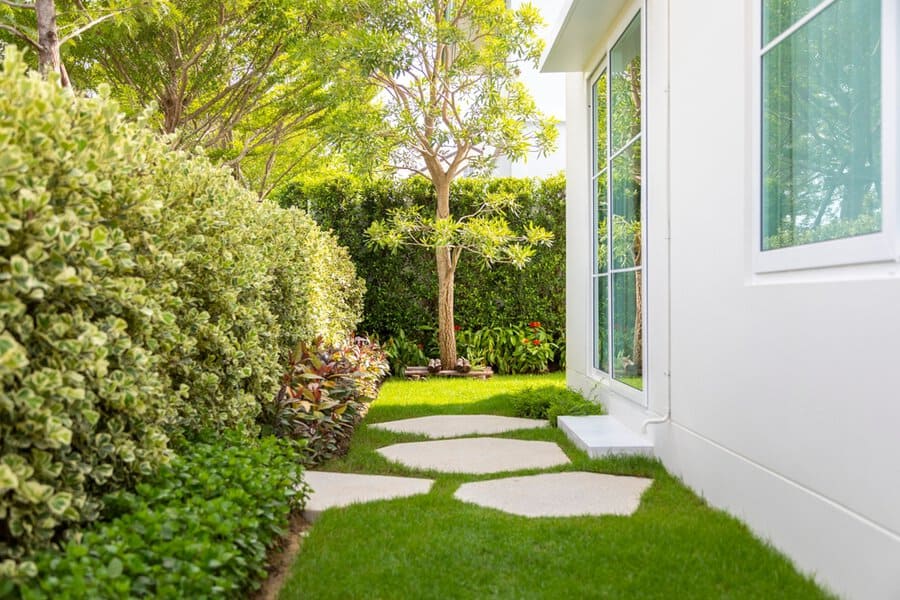
10 Exterior Facade Ideas That Make a Backyard Feel More Luxurious
A backyard starts to feel luxurious when you start to care for it, and when it stops looking like leftover space. The strongest outdoor rooms have a clear architectural backdrop: a wall that frames the dining area, a surface that catches evening light, a privacy screen that feels intentional, or a material palette that carries the home’s interior language outside.
That does not mean every backyard needs a full renovation. Often, the facade is the missing layer. A plain stucco wall, underused boundary, pool surround, outdoor kitchen backdrop, or garden-facing elevation can become the visual anchor that makes the entire yard feel designed rather than decorated.
Below are 10 exterior facade ideas that bring more structure, texture, and polish to a backyard, with practical notes on materials, installation, and long-term outdoor performance.
1. Add a sculptural tile accent wall
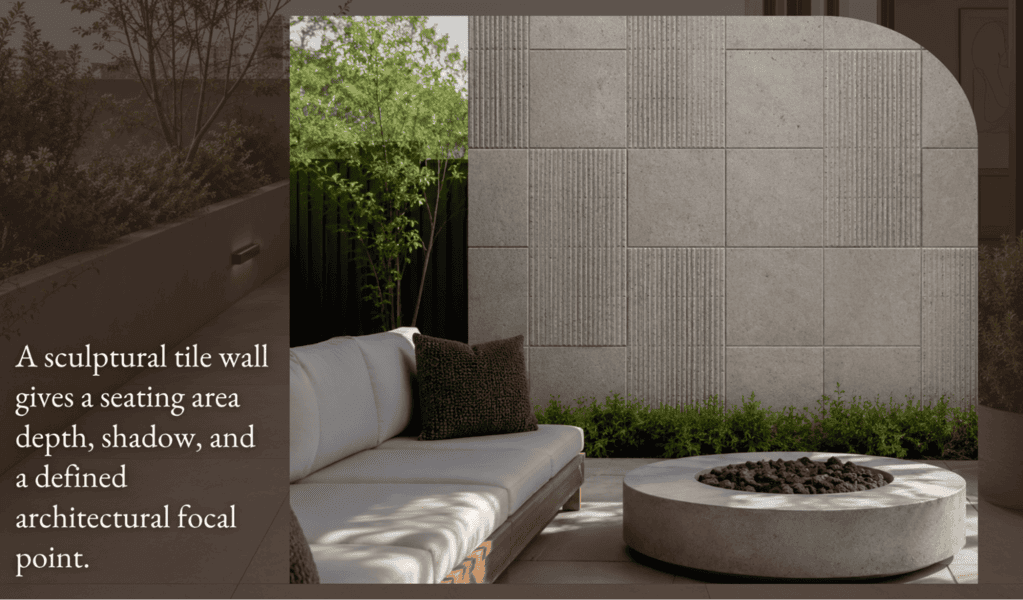
A tiled exterior wall can do what paint rarely can outdoors: create movement.
Relief tile, ribbed cement, dimensional brick, and handcrafted modular pieces catch light differently throughout the day, which makes the wall feel alive even when the planting is simple.
OUTERclé’s weatherproof outdoor wall tiles are one of the premium recommendations relevant for homeowners and designers who want outdoor surfaces with both texture and performance and that too with design variations that would make you fall in love. Use them behind a lounge area, along a pool-facing wall, or as a vertical accent beside an outdoor kitchen, and convert that space into a living art corner.
The key is scale.
A small courtyard may only need one tiled plane, while a larger backyard can handle a full cladded wall. Before installation, confirm the substrate, waterproofing approach, drainage path, and expansion joints with a qualified installer. Outdoor tile is not just a finish, it is part of an exterior assembly.
2. Turn a garden wall into built-in architecture
Garden walls work hardest when they do more than divide space. The right garden wall can transform both the look and function of an outdoor living area, especially when it incorporates seating, lighting, counters, or planting.
A low retaining wall can become a bench.
A taller wall can frame a fire feature.
A plain boundary can be broken up with niches or raised planters.
For a luxury feel, keep the detailing clean. Align wall caps with paving edges, avoid awkward slivers at corners, and choose a finish that relates to the house exterior. If you are adding tile or stone over an existing wall, make sure the wall is stable, properly prepared, and suitable for exterior cladding.
3. Use a facade to create an outdoor dining backdrop
A dining terrace often needs one strong vertical surface to feel complete. Without it, the table can seem stranded in the landscape.
A tiled or stone-clad wall behind the dining area creates a sense of enclosure without needing a full structure overhead.
Think about sightlines from inside the home. If the dining wall is visible through sliding doors or kitchen windows, treat it as part of the interior composition. A warm brick, honed stone, handmade cement tile, or matte textured facade can visually connect indoor flooring, cabinetry, and outdoor furniture.
Installation sequencing matters here.
Run electrical rough-ins for sconces, outlets, or heaters before cladding begins. Plan furniture placement early so wall lighting falls above the table or sideboard, not awkwardly behind chairs.
4. Frame the pool with vertical texture
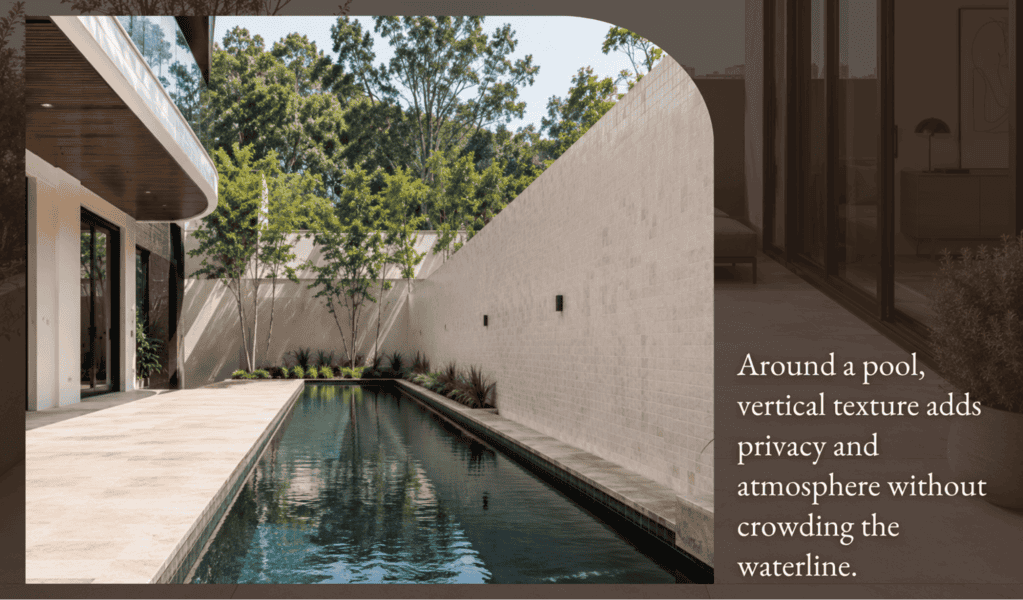
Pool areas often focus on decking, loungers, and waterline tile, but the surrounding walls shape the mood just as much. A textured facade can make the pool feel more resort-like, particularly in compact backyards where fencing or neighboring walls are always in view.
For wet and splash-prone areas, choose materials rated for the application. Wall tile near a pool must handle UV exposure, moisture, and cleaning routines. If the material continues onto walking surfaces, slip resistance becomes a separate consideration, so review DCOF or other relevant traction guidance for the specific product and location.
A simple palette usually works best: one wall material, one paving material, and planting that softens the edges. Too many finishes around water can quickly make the backyard feel busy.
5. Combine privacy screening with material depth
Privacy is one of the biggest drivers of backyard upgrades in the United States, particularly in dense suburbs and urban lots. The mistake is treating it as a fence problem only. A more refined approach combines screening with a finished facade.
Wood slats, metal screens, breeze blocks, or masonry openings can sit in front of a textured wall to create shadow play. This layered effect feels architectural and gives the backyard depth. It can also reduce the visual heaviness of a tall boundary.
Plan for airflow, maintenance access, and local code requirements. Privacy elements may be subject to fence-height rules or setback regulations, and screens attached to buildings need proper fastening into suitable structure.
6. Extend the home’s exterior material palette into the yard
A luxurious backyard does not need every surface to be expensive. It needs coherence. The modern landscape coverage emphasizes that wood, stone, patios, walkways, and metal elements all play a role in modern outdoor planning. The same principle applies to facades.
Pull one or two materials from the house exterior into the backyard.
If the home has brick, use a related brick tone on a garden wall. If the exterior has dark metal windows, repeat that finish in lighting or screen frames. If the architecture is pale stucco, a warm textured tile wall can keep the palette quiet while adding tactile interest.
This approach avoids the showroom effect, where each new feature looks selected in isolation.
7. Create a fireplace or grill wall with architectural presence
Fireplaces, pizza ovens, and outdoor kitchens naturally become gathering points. The facade around them should feel durable, proportional, and easy to live with.
A grill wall may need heat-tolerant materials, proper clearances, grease-resistant detailing, and access panels for utilities. A fireplace wall needs attention to venting, masonry, and local code.
The design opportunity is in the composition.
Center the firebox or grill within a larger wall plane, add storage niches with clean reveals, and avoid using too many small decorative pieces around a high-heat zone. Matte brick, textured cement, stone, and exterior-rated tile can all bring depth without competing with flame, food, or furniture.
8. Use curved walls to soften hardscape
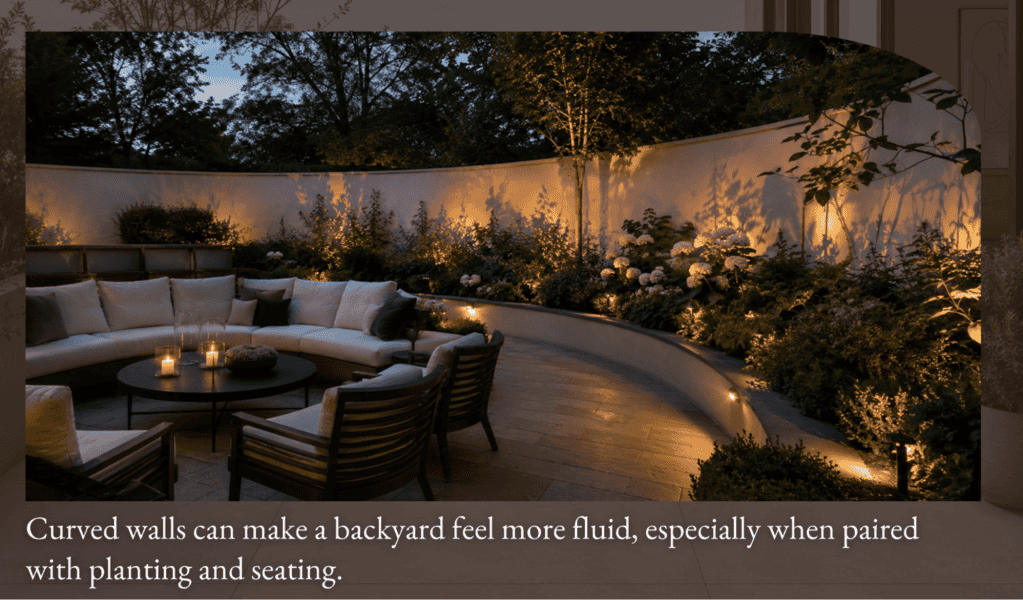
Straight walls are practical, but curves can make a backyard feel custom. A curved facade can wrap around a small patio, frame a spa, guide movement through a garden, or soften the edge of a dining terrace. The garden wall guidance points out that curved wall designs can frame pools, ponds, patios, and landscape features while maintaining natural flow.
Curves require more planning than straight runs.
Modular materials need careful layout to prevent awkward cuts, and caps should be selected before the wall is built. For tile, mock up the pattern radius and grout spacing in advance. Even slight inconsistencies become more visible on a curved plane.
9. Add lighting that grazes the facade
Luxury outdoor lighting is less about brightness and more about placement. A flat wall may only need soft washes, but a textured facade benefits from grazing light, where fixtures are positioned close enough to emphasize relief, shadow, and surface variation.
Use warm color temperatures for dining and lounge areas. Conceal fixtures where possible, and avoid placing lights where they shine directly into seating or neighboring properties. If the wall is tiled, coordinate fixture boxes and penetrations before installation so the layout remains clean.
Lighting also changes how color reads. Always view material samples outdoors, at different times of day, and under the lighting you plan to use.
10. Design for weathering, not just first impressions
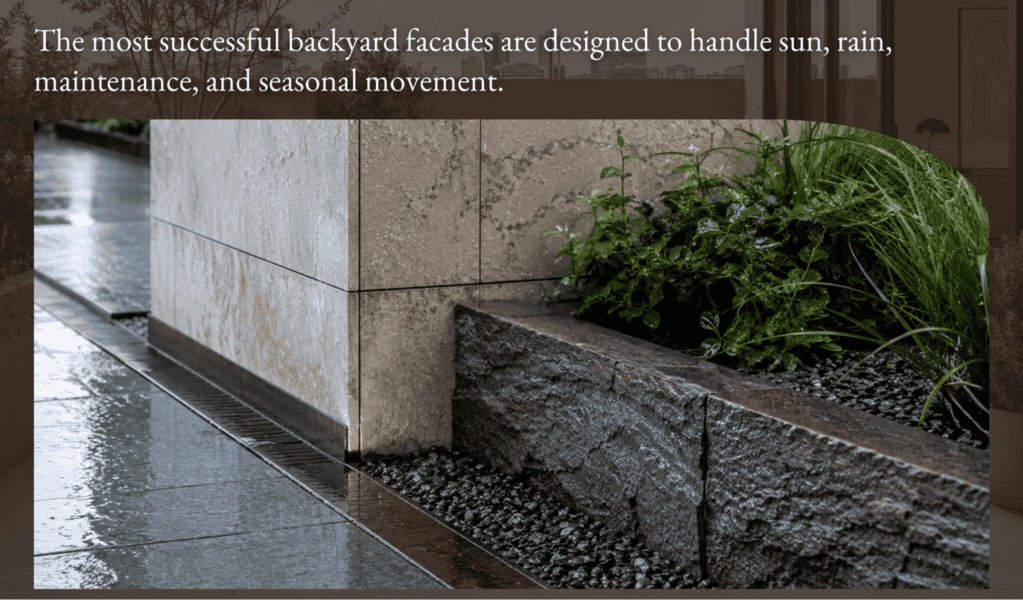
The most luxurious backyard facade is the one that still looks considered years later. Outdoor materials face UV exposure, rain, heat, freeze-thaw cycles in many U.S. climates, irrigation overspray, pool chemicals, and routine cleaning. A finish that looks beautiful in a sample photo still needs the right rating, installation method, and maintenance plan.
Ask practical questions before committing. Is the tile or cladding rated for exterior vertical use? Does the wall need a drainage gap or rainscreen strategy? Will the substrate move? How should grout, sealant, and edges be maintained? Are there climate-specific concerns such as coastal salt air, desert heat, or freeze-thaw conditions?
A good facade is not simply applied to the backyard. It is coordinated with the wall assembly, lighting, planting, furniture, and the way the space will actually be used.
Final thoughts
A backyard feels more luxurious when its vertical surfaces are treated with the same care as its furniture and planting. Whether the project is a tiled accent wall, a garden boundary, a pool backdrop, or a fireplace facade, the goal is the same: create structure, texture, and permanence.
The best results come from pairing design ambition with material discipline. Choose finishes that suit the climate, plan the installation sequence before work begins, and use the facade to define how the outdoor room is meant to feel.