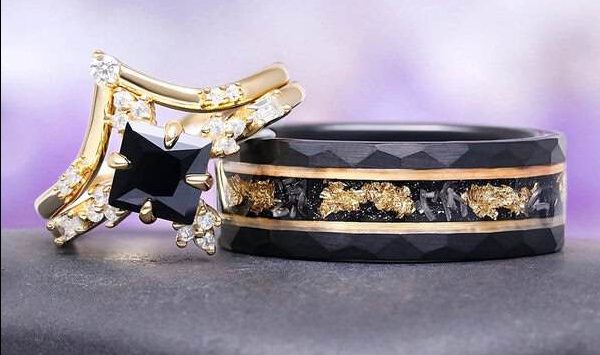
Gothic Engagement Rings: A Complete Buyer’s Guide
Traditional engagement rings tell one story. Gothic engagement rings tell a different one – dark stones, architectural settings, and a mood that owes more to Victorian mourning jewelry and cathedral windows than to a jewelry counter template. If you’ve been searching for something with more character than a plain round diamond solitaire, this is the style built for you.
At the center of almost every gothic engagement ring is a black gemstone. It’s the detail that signals “this isn’t conventional” from across the room, and it’s also the detail that most buyers get wrong – assuming all black stones are interchangeable when they vary wildly in hardness, price, and how they wear over time. This guide walks through everything you need to know before you buy.
What Is a Gothic Engagement Ring?
A gothic engagement ring is built around dark aesthetics rather than the classic bright-and-clear look. Think black ruthenium finishes, oxidized silver, dramatic stone shapes like coffin cuts and marquise, and settings inspired by gothic architecture, dark romance literature, and Victorian design. Black gemstone rings are usually the centerpiece – the stone is what signals “this isn’t a conventional ring” from across the room.
The two ideas overlap but aren’t identical. Not every black gemstone ring is gothic (a minimalist black onyx band can read modern, not dark-romantic). And not every gothic ring uses a black stone – some lean on deep red garnet, moss agate, or alexandrite instead. But together, black gemstones plus gothic detailing is the combination most people mean when they say “dark engagement ring.”
Why This Style Matters Right Now
Gothic engagement rings have become increasingly popular as more couples move away from the assumption that every engagement ring should feature a round diamond in a white gold prong setting. Instead, buyers are looking for rings that reflect who they actually are rather than following tradition. For people who’ve built an identity around alternative style, gothic jewelry, or simply a preference for bold over conventional, a black stone ring isn’t a phase, it’s the obvious choice.
There’s also a practical driver: black gemstones let you get a large, striking center stone at a fraction of the cost of a comparable white diamond, without looking like a compromise.
Key Benefits of Choosing a Black Gemstone Ring
- Distinctive without trying too hard. A dark stone reads as intentional and considered, not flashy.
- Better value per carat. Black moissanite, spinel, and onyx cost far less than white diamonds of the same size.
- Everyday wearability. Dark stones hide daily wear – scuffs and light scratches – better than colorless stones do.
- Pairs with any metal. Black gemstones look sharp in yellow gold, white gold, rose gold, or black ruthenium.
Factors To Consider Before You Buy
Hardness matters more than looks. If the ring will be worn daily, stick to stones rated 7.5 or higher on the Mohs scale – black moissanite, black diamond, black sapphire, and black spinel all qualify. Black onyx, obsidian, and black opal are softer and scratch more easily, so they’re better suited to occasional wear or protective settings.
Setting style affects durability. A bezel setting wraps metal around the stone’s edge, protecting it from chips – a smart choice for softer gemstones or an active lifestyle. Prong settings show off more of the stone but offer less protection.
Metal finish changes the whole mood. Black ruthenium and oxidized silver deepen the gothic feel. White gold gives a black stone a cooler, sharper contrast. Rose gold softens it. Yellow gold makes it feel more vintage and warm.
Lab-grown vs. natural. Lab-grown black diamonds and moissanite offer the same hardness and look as their natural counterparts at a lower price, with fewer sourcing concerns – worth considering if budget or ethics are a priority.
Best Practices When Shopping
Get the ring size right before you commit – resizing dark, treated, or set stones can be trickier than resizing a plain band. Ask specifically what treatment the stone has had (many black gemstones, including onyx and some spinel, are dyed or heat-treated – this isn’t a red flag, but you should know it going in). And buy from a jeweler who states the stone type plainly rather than using “black gem” as a vague catch-all.
Common Mistakes To Avoid
A lot of buyers assume all black stones are interchangeable. They aren’t – a black onyx ring and a black diamond ring have completely different durability, price, and resale profiles. Another common mistake is choosing a soft stone for a manual job or gym-heavy lifestyle, then being surprised when it dulls within a year. And skipping the return policy is a mistake specific to this category, since color and finish can look different in person than on screen.
Real-World Styling Examples
A black moissanite in a coffin-cut shape set in black ruthenium reads unmistakably gothic – sharp, architectural, high-contrast. A round black spinel in a simple bezel with rose gold reads softer, more everyday-wearable, still dark but far less costume-like. A black onyx in an ornate vintage-inspired setting with filigree detail leans Victorian rather than modern gothic. The setting does as much work as the stone in defining which mood you land on.
Industry Trends
Dark romance and alternative bridal jewelry has moved from niche to mainstream in the past few years, driven partly by fantasy romance literature and partly by a broader shift toward personalized, non-traditional weddings. Coffin cuts, moon and celestial motifs, and mixed dark-stone settings (black paired with garnet or deep sapphire) are showing up more often, alongside growing demand for lab-grown black diamonds and moissanite as durable, budget-conscious alternatives to natural stones.
Buying Guide: How To Choose Yours
- Decide how often you’ll wear it – daily wear points you toward Mohs 7.5+.
- Pick your stone shape first (coffin, marquise, round, oval) since it drives the whole aesthetic.
- Choose the metal and finish that matches your existing jewelry and skin tone.
- Confirm the setting protects the stone appropriately for its hardness.
- Check the return and resizing policy before ordering.
- Ask for the stone’s treatment history in writing.
Frequently Asked Questions
Are black gemstone rings good for engagement rings?
Yes, as long as you choose a stone with sufficient hardness – black diamond, moissanite, sapphire, or spinel are all suitable for daily wear.
Is black onyx too soft for an engagement ring?
It’s wearable, but softer than diamond or spinel. A bezel setting and a bit more care make it a workable choice for people who don’t do heavy manual work.
Do black gemstones lose their color over time?
Untreated stones like natural black spinel and black diamond hold their color permanently. Dyed or coated stones can fade slightly with years of wear and sun exposure.
What does a black gemstone ring symbolize?
Most commonly strength, protection, and individuality – though meaning is ultimately personal, and many couples choose black stones simply because they love the look.
Can gothic engagement rings be resized?
Most can, though intricate settings with pavé stones or filigree detail may limit how much a jeweler can safely resize.
Final Words
A gothic engagement ring built around a black gemstone gives you something a standard diamond ring can’t: real personality. The category rewards a little homework – knowing your stone’s hardness, understanding what’s under the finish, and picking a setting that protects rather than just displays. Get those right, and you end up with a ring that looks as sharp in ten years as it did on day one.