7 Signs Your Luxury Watch Needs a Professional Service
Your watch talks to you before it breaks. A few seconds off here. A foggy crystal there. Most owners shrug it off until the movement seizes and the repair bill triples. Below are the 7 signs your luxury watch needs a professional service now. These come from the workbench, not a brochure.
1. It Gains or Loses More than a Few Seconds a Day
A healthy mechanical movement runs tight. A COSC-certified chronometer sits between roughly -4 and +6 seconds a day. Many good watches beat that. So when your Rolex suddenly drifts 20, 30, or even 40 seconds off, something is wrong inside.
The lubricants have dried or thinned. Friction climbs. Amplitude, the swing of the balance wheel, drops. Metal starts to wear metal. Set your watch against your phone before bed and compare it each morning for three days, and track the drift. A steady, growing gap means it’s time, says Aiman Moner, a professional luxury watch expert with 35 years of experience at ChronoStreet.
2. The Power Reserve Dies Early
Fully wound, most modern automatic watches have a 38-hour to 72-hour power reserve. When you take it off Friday night, it should still tick on Sunday or even Monday. If your watch used to run two days off the wrist and now quits overnight, the mainspring or the oils are tired. A shrinking power reserve is the movement running out of breath.
3. Fog, Moisture, or Dust Under the Crystal
Do you see condensation on the inside of the glass? If yes, take it off. Now. The gaskets that seal the case have hardened and failed. Your water resistance is gone, and the moisture rusts steel parts fast, sometimes within days. Thus, this is not a “next month” job. It is the one sign on this list you treat as an emergency.
4. The Crown Feels Gritty, Loose, or Won’t Wind Smooth
The crown is your watch’s front door. When winding feels sandy or setting the time grinds and skips, the stem, gaskets, or keyless works are worn out. A screw-down crown that won’t seat properly is worse. It breaks the seal and lets water in. Don’t force it.
5. It Suddenly Runs Wildly Fast
Does your luxury watch jump minutes ahead in a single day? If yes, your watch is probably magnetized. Magnets hide everywhere, such as in phone speakers, laptops, tablet covers, fridge doors, and handbag clasps. When the hairspring magnetizes, its coils stick together and the balance races. A watchmaker fixes this in seconds with a demagnetizer, then confirms the rate on a timegrapher. Cheap to solve, easy to miss.
6. You Hear or Feel a Rattle After a Knock
Dropped it on tile? Caught it on a doorframe? A hard shock can shift the rotor, crack a jewel, or bend a pivot. If you hear a faint rattle when you tilt it or the second hand stutters instead of sweeping clean, get it looked at. Shock damage hides quietly, then spreads.
7. It’s been 3 to 5 Years or You Have No Idea
Rolex, Omega, and Patek Philippe suggest a full service every 5 to 10 years. But daily wear, heat, sweat, and water shorten that window fast. If you have no service record, assume it is overdue. Fresh oils and clean gaskets cost a fraction of a rebuilt movement.
Aiman Moner says, “Never crack open a luxury watch at home.” One speck of dust or a slipped screwdriver can cost more than the service itself. Sealed movements need a clean bench, factory-grade tools, and a pressure test to reseal properly.
What a Real Service Actually Does
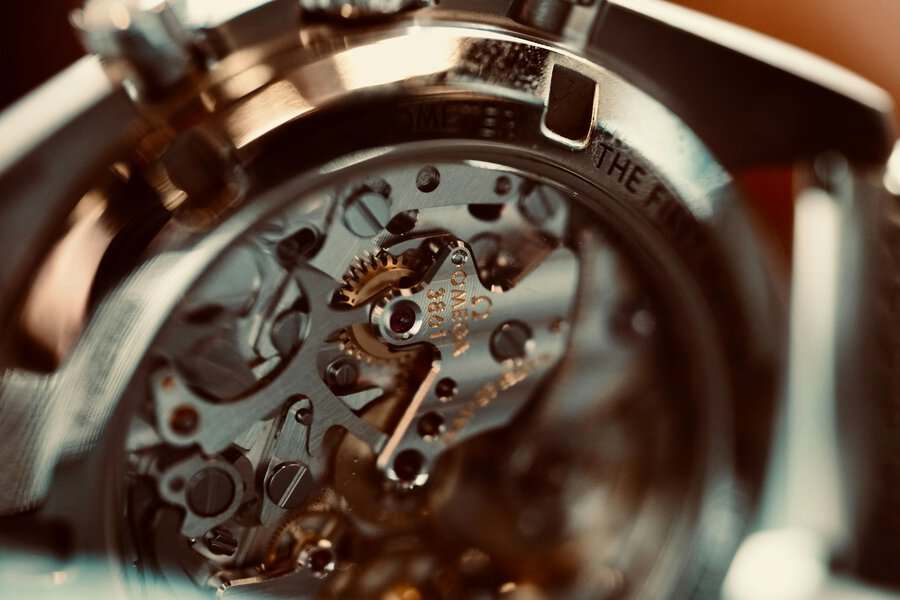
A proper service does not mean simply changing the oil. In fact, an expert watchmaker:
- Strips the movement down to individual parts.
- Cleans each component in an ultrasonic bath.
- Replaces worn gaskets, springs, and tired lubricants.
- Reassembles and oils with the correct grade for each contact point.
- Regulates the rate on a timegrapher.
- Pressure-tests the case to restore water resistance.
Whether you have Rolex GMT-Master II Pepsi, Patek Philippe Aquanaut, Richard Mille RM 030 Rose Gold, or any other luxury watches for men, you still need proper care and maintenance to protect your investment and retain your timepiece’s long-term value.