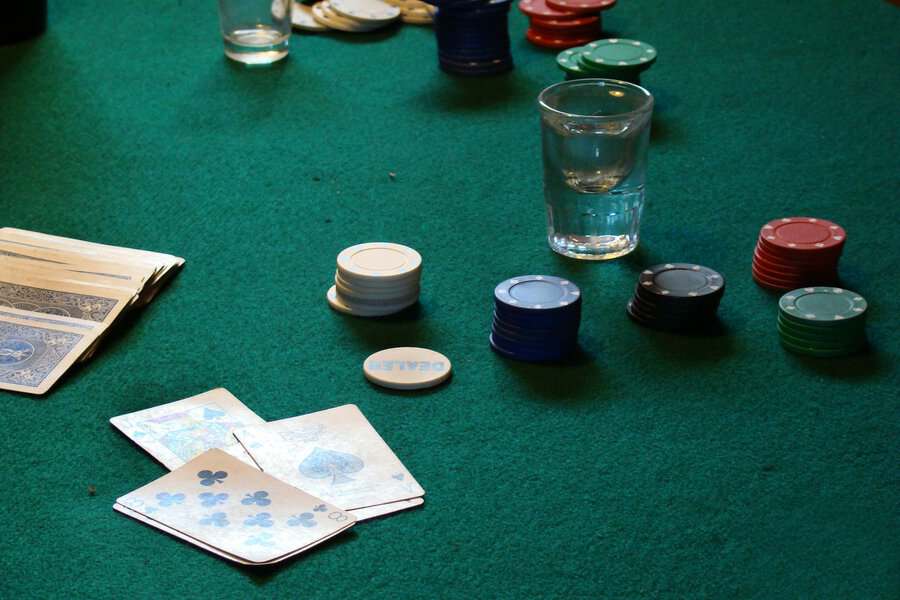
Stoic Discipline: Emotional Intelligence at the Poker Table
Marcus Aurelius was a Roman Emperor, but history remembers him as a warrior-philosopher. Between military campaigns and the daily grind of Roman governance, he practiced Stoicism – a philosophy built for surviving chaos. He wrote notes to himself. Not for anyone else. Just reminders to stay rational when everything around him was pulling toward emotional reaction.
These personal journals, later published as Meditations, are not a leadership manual. They are a man talking himself down from the edge. And the edge he kept returning to was the same one every poker player knows: something unfair happens, and the instinct is to let it change how you behave next. That is the whole game. Not the cards. The response to the cards.
What the Table Actually Tests
People frame poker as a game of skill, and it is. But the skill that separates disciplined players from everyone else is not hand reading or range construction. It is making the same quality decision at the end of a losing session as at the start of a winning one. That is an emotional intelligence problem, not a strategic one.
Epictetus drew the line clearly: some things are up to us, some things are not. The river card is not. Whether your opponent hit their two-outer is not. Your response to it is. The decision you make on the next hand is entirely within your control, and over a long enough sample, it is the only thing that determines your results. Most players understand this in theory. Very few apply it when it actually costs something.
Tilt Is What Happens When EQ Fails
Tilt is not just frustration. It is a specific cognitive failure: the belief, held somewhere below conscious reasoning, that the universe has been unfair and the next hand is where it gets corrected. A player on tilt calls wider because folding feels like giving up. They bet larger because they want the pot back. They make hero calls with marginal hands because something in them needs to be right about something. None of that is strategy. It is emotional flooding with a betting pattern attached.
The financial cost is not subtle. A player who runs at 5bb/100 across a hundred sessions can erase months of work in a single tilted afternoon. The problem is not knowing this. The problem is that knowing it does not protect you when a three-outer hits for the third time in an hour and your stack is half what it was.
What does protect you is the habit Aurelius kept working on: the pause between stimulus and response. Not suppressing the emotion. Noticing it, naming it, and then deciding how to act rather than just reacting. That gap is where discipline lives.
Composure as a Strategic Weapon
There is an offensive side to this that does not get discussed enough. A player who remains unreadable under pressure extracts information from opponents who are not. At a live table, physical composure is the read. Online, it shows up in bet sizing and timing. A player on tilt becomes patterned. Their decisions get irregular in ways that anyone paying attention can exploit.
Emotional control is not just damage limitation. It is active edge. The same principle transfers cleanly out of poker. A negotiator who does not let frustration show when a deal is going sideways. A surgeon making the same quality decision in hour six as in hour one. These are identical skills. The table just provides a faster feedback loop than most real-world environments do.
Where the Discipline Gets Built
Reading about composure is not the same as practising it. The practice requires real conditions: actual stakes, real opponents, decisions that cost something when they are wrong.
That is why the environment matters as much as the intention. Stoic practice only holds up if it gets tested under real conditions. For modern players, this testing ground has shifted online. The sheer volume of hands encountered on platforms like WPT Global compresses the learning curve, forcing players to confront variance and maintain composure over thousands of decisions a day. The digital environment demands the same quality of decision-making in hand 200 as in hand one, which is exactly the condition under which real discipline gets built rather than just theorised about.
This guide on hobbies worth building your life around makes a point that applies here: the pursuits that actually develop character are the ones with genuine difficulty built in. Not simulated stakes. Real ones.
The Transfer
Aurelius was not writing about poker. But the problem he kept returning to is structurally identical. You are making consequential decisions with incomplete information, against live opposition, and the outcome is partly outside your control. Sound familiar? The business negotiation that goes sideways. The risk call made under time pressure. The moment in a meeting when someone says something that deserves a considered response rather than a reactive one.
The table compresses the feedback loop. A business decision might take months to reveal itself. A poker hand takes minutes. The emotional dynamics are the same. The learning cycle is just faster. Aurelius would have recognised it immediately. Different arena. Same discipline. The cards change. The task never does.
Read also: 50 Gaming Man Cave Design Ideas