Image by Manfred Antranias Zimmer from Pixabay
How Food Waste Recycling Fuels a Sustainable Future
In a world increasingly aware of its environmental footprint, the sustainability debate often centers on the very visible culprits of fossil fuels and industrial pollution. Yet, noise-dampening issues equally abound in nearly every home: food waste. When the discarded food makes it to landfills, it undergoes anaerobic decomposition (without oxygen), releasing methane into the atmosphere. Methane has the clout of being a short-term forceful greenhouse gas, wielding stronger potency than carbon dioxide. This very cause adds to climate change, a chilling reminder that even our dining leftover has a global bearing. This is where food waste recycling at home can become a great option for an otherwise underrated positive environmental impact. Diverting organic matter away from landfills means we are not only reducing methane emissions; we are actually turning it into useful resources, thereby promoting a circular economy for the good of the planet and our communities.
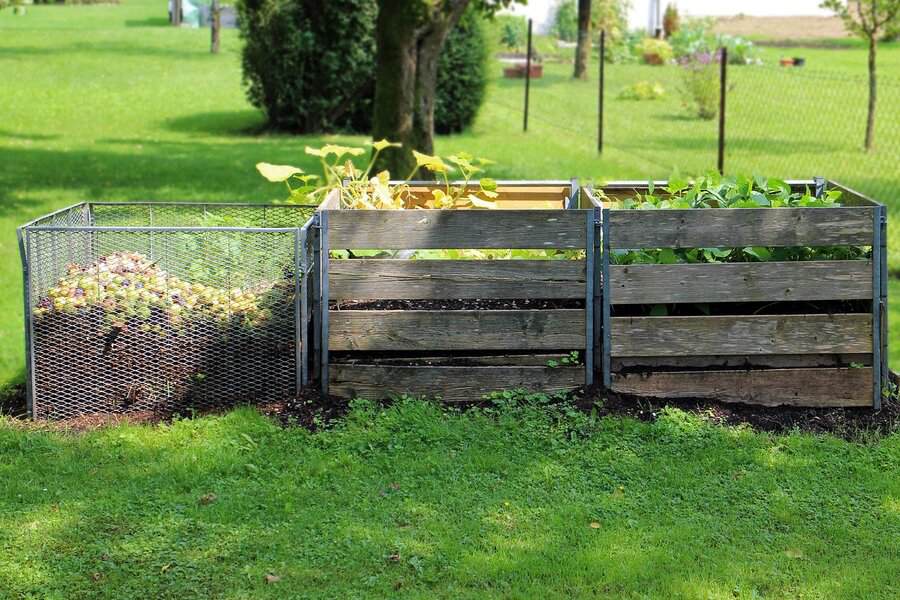
One of the primary ways food waste recycling contributes to sustainability is through the production of nutrient-rich soil amendments. Composting converts organic waste into a dark, crumbly substance that improves soil structure and fertility. This is where the compost vs. fertilizer debate becomes pertinent. Synthetic fertilizers usually just supply plants with certain nutrients but often do not provide organic matter for long-term soil health and tend to run off into waterways, causing pollution; they also require much energy to produce. On the other hand, compost acts as a complete soil conditioner: it improves water retention in soil, reduces the need for chemical pesticides by fostering healthier plants, sequesters carbon in soil, and releases an array of nutrients slowly and naturally. Cutting down on synthetic agricultural inputs is essentially at the front of sustainable agriculture and a healthier ecosystem.
Anaerobic digestion (or AD) is another method of recycling for food waste. It is the process of disintegrating organic materials in the absence of oxygen with the production of biogas that serves as a renewable energy source and is mainly composed of methane. This biogas can be trapped and can be used for the generation of electricity, for heating purposes, and to fuel vehicles. It acts as direct replacement for fossil fuels. The solid end product from digestion, known as digestate, is also a nutrient-rich material which can be used as a soil conditioner, thereby contributing in nutrient cycles again. Large-scale AD plants offer a very strong means of dealing with food wastes from municipal and commercial sectors by transforming a problem of pollution into one of clean energy and valuable agricultural input.
While food waste recycling is primarily praised for the beneficial environmental co-impact, the economic and social dimensions also provide strong foundational pillars toward securing a truly sustainable future. From an economic standpoint, food waste diversion reduces landfill fees, sustains employment mostly in collection and processing sectors, and markets the resulting products—or compost and biogas—generally at lucrative levels. This can be an attractive opportunity for a municipality to save costs and develop revenue streams. On a social level, involvement in food waste recycling creates an environment conducive to nurturing heightened community responsibility and environmental consciousness. Educating people on reducing waste and sorting techniques enables individuals to make conscious decisions, which in turn, curb the generation of wastes, a core principle of sustainability from a cradle-to-cradle approach.
At a higher level, food waste recycling transcends waste management and redesigns the perception and valuation of organic matter. When food scraps are viewed as potential soil amendments and energy sources rather than refuse, we are in essence transformative. They must be acknowledged for their waste reduction capacity and for producing a number of other environmental benefits such as carbon sequestration, soil revitalization, and natural resource conservation, thereby promoting a more resilient and circular economy. The implementation of this process at every scope possible, from the kitchen on a small scale to industrial operations at a large scale, is absolutely necessary in paving the way to a truly sustainable future for generations to come.
Read also: Eco-Friendly and Stylish Pallet Garden Designs for Your Home