
How to Commute in a Suit Without Wrinkling It: A Men’s Style Guide for City Professionals
How do you walk into the office in a suit that looks like you did not just spend forty minutes on the subway? Every guy who has tried to commute in tailoring knows the problem. The jacket bunches at the lap. The shirt creases across the chest strap of a bag. The trouser knees set into a permanent fold. By the time you reach your desk you look like you slept in it.
Let’s get started on fixing that. The fix is not a commuter-suit in a special travel fabric. It is a strategy built around how you carry the suit to work and when you actually put it on. Here are five commute scenarios most professionals face and the play that works for each.
1. The train commute (30-plus minutes, seated)

This is the one most guys get wrong. Wearing a wool two-piece for a long seated commute is the fastest way to set creases into the lap, hips, and lower back. Wool fibers recover from short-duration compression, but prolonged seated pressure exceeds the natural alpha-keratin recovery threshold (source).
The fix: travel in a casual base layer and carry the suit in a structured garment bag. Change at the office, or in the building’s restroom ten minutes before you clock in. Bring the suit separately and you arrive wearing something that looks pressed, because it was pressed this morning and has not been sat in since.
2. The subway commute (short, standing)

If your commute is under 20 minutes and you stand the whole time, you can usually wear the suit as-is. The caveat is the messenger bag or backpack strap.
A shoulder strap running diagonally across a suit jacket creates a compression crease that the wool will not shake out through the workday. Switch to a hand-carried bag or use a garment-friendly tote held in one hand. If you routinely ride packed subway cars, treat this as a Scenario 1 commute and carry the suit instead.
3. The bike commute
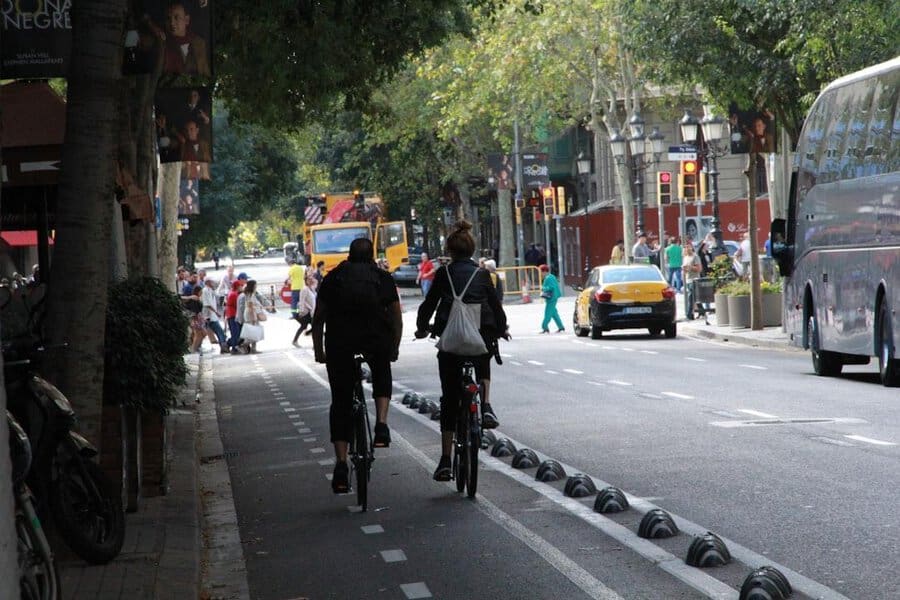
Non-negotiable: do not wear the suit on the bike. Chain oil, rain, seat rub, and sweat each compound on a wool two-piece in ways nothing resolves at the other end.
Ride in your bike kit, shower at the office if the building has the facilities, and change into the suit you carried in a structured garment bag. This is the commute scenario that most justifies investing in a proper bag, because you are moving tailoring in full motion across weather and distance.
4. The car commute

Cars are better than trains on the wrinkle front because you are seated in a fixed position against leather or fabric upholstery, not compressed between other passengers. A 30-minute drive in a wool suit will usually steam out within an hour of walking around the office.
The two fixes that extend this: remove the jacket before you get in and hang it on the back-seat hook, and keep the trousers from bunching by sitting with the belt line flat rather than twisted.
5. The walk commute

The easiest scenario. Walking in a suit is closer to how tailoring is meant to be worn than any seated commute. The moderate movement flexes the wool back into shape rather than compressing it.
The one gotcha: weather. Light rain will not ruin wool, but heavy rain and summer humidity will. Carry a compact umbrella. For humid-summer walks, bring a shirt in a garment bag and swap at the office. Arriving with a sweat-soaked collar is a bigger issue than a lap crease.
What you actually carry it in
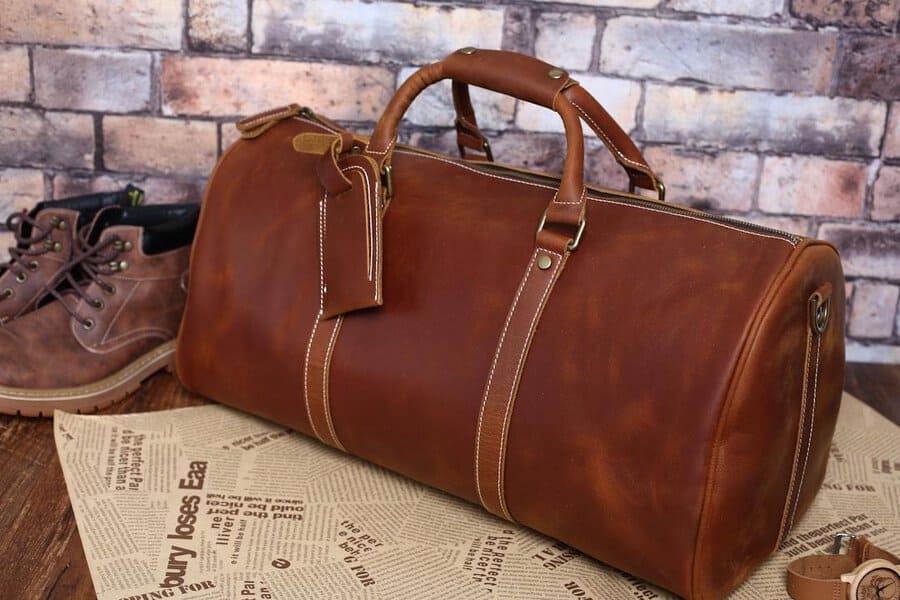
Five scenarios, one piece of kit that keeps showing up: the structured garment bag. If you are going to buy one, buy a real one.
The cheap nylon dust-cover bags you see at chain department stores are sized for dry-cleaner returns, not daily commuting. They crush the shoulder line the moment you set anything on top of them in a taxi or overhead rack. A structured garment bag is a different category. It has a rigid spine that holds the suit shoulders flat, a proper hanger hook that clips into the bag rather than floating at the top, and an exterior material that does not pill or fray when it is picked up and set down twice a day.
At the higher end of the category, Von Baer make a great garment bag designed for exactly this use case. The bags are handcrafted in family-run Italian studios and carry a full-grain leather build that keeps its shape through years of daily pickup-and-drop, which is the one failure mode cheaper bags share. Leather construction at this grade also ages as it wears in rather than scuffing, and the line is backed by a 5-year warranty against defects. This is the part where a one-time investment beats replacing a nylon bag every eighteen months.
If your budget does not stretch to a premium leather carrier, the next-best move is a structured canvas-and-leather hybrid from a real luggage brand rather than a dry-cleaner hand-out. Sub-$100 nylon bags do not do the job long enough to be worth the repeat spend.
The bottom line
Commuting in a suit is a solvable problem. The solution is almost never a special commuter-cut suit or a wool blend with synthetic stretch. It is a strategy:
- Carry the suit to the office in a structured garment bag on long seated commutes
- Change on arrival, not before you leave the house
- Match the bag material and construction to how many years you plan to commute
A good suit holds up to years of daily wear if you do not compress it on the way in. That starts with what you carry it in.
Ready to head to work looking like you did not just spend an hour getting there? Upgrade the bag first. The suit takes care of itself.