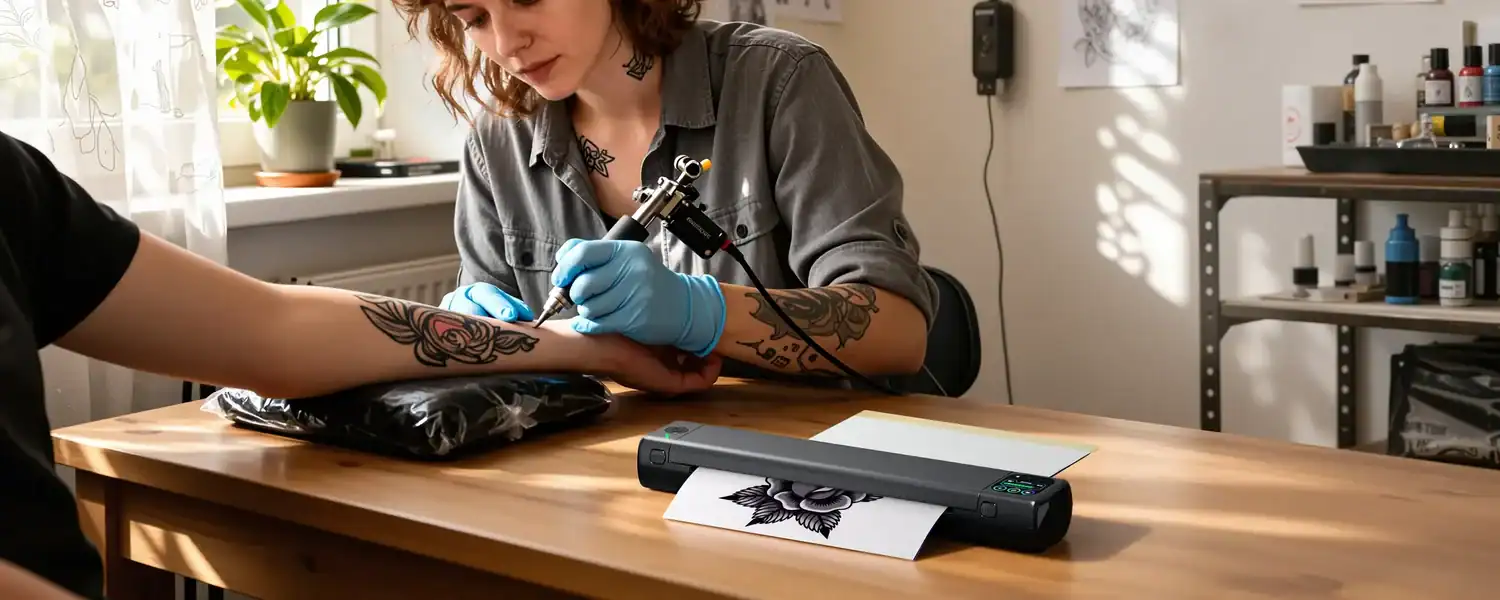
Best Tattoo Stencil Printers in 2026: What Artists Should Actually Look For
In modern tattooing, the stencil is no longer just a preliminary step—it’s the foundation of the entire piece. Whether working on fine-line designs, large-scale compositions, or fast-paced convention flash, stencil quality directly impacts precision, efficiency, and the final result on skin.
As more artists shift toward digital workflows, tools like the Phomemo M08F Plus are becoming part of everyday setups—bridging the gap between digital design and physical stencil transfer. This shift has made stencil printers less of an optional tool and more of a core part of the workflow.
Why Stencil Printing Has Changed
Hand-tracing still exists, but it’s increasingly inefficient for detail-heavy or high-volume work. Digital design is now standard, and artists expect a process that moves quickly from screen to stencil without extra steps.
Today, the difference between entry-level and professional stencil printers comes down to how well they integrate into that workflow.
Key Features That Actually Matter
Print Clarity and Line Precision
Most professional stencil printers operate at around 203 DPI, which has become the standard for clean, readable linework. At this level, fine details—such as micro lettering, geometric patterns, or delicate guides—transfer more consistently without breaking or blurring. Systems optimized for tattoo transfer paper further improve stability and output accuracy.
Workflow Integration (App + Editing Tools)
Modern stencil printers are part of a larger digital process. Mobile apps allow artists to adjust contrast, refine lines, and simplify reference images before printing. For larger compositions, image splitting tools help divide and align multi-part stencils with greater precision—saving time during preparation.
Paper Handling Reliability
Tattoo transfer paper is sensitive to heat and pressure, and poor feeding can lead to wrinkles or distortions. More advanced stencil printers now include improved paper handling systems designed to keep output flat and consistent, reducing both errors and material waste.
Portability and Studio Flexibility
With more artists working across studios, conventions, and guest spots, portability has become a practical requirement. Lightweight devices—typically around 1.6 lbs—with built-in batteries allow for on-demand printing without fixed setups.
Connectivity and Ease of Use
Bluetooth connectivity enables direct printing from phones or tablets, while USB connections provide stability when needed. Simple, intuitive controls—either through apps or on-device interfaces—help minimize interruptions during busy sessions.
A Practical Example: Phomemo M08F Plus
Devices like the Phomemo M08F Plus reflect how the category is evolving toward more integrated, mobile-first solutions.
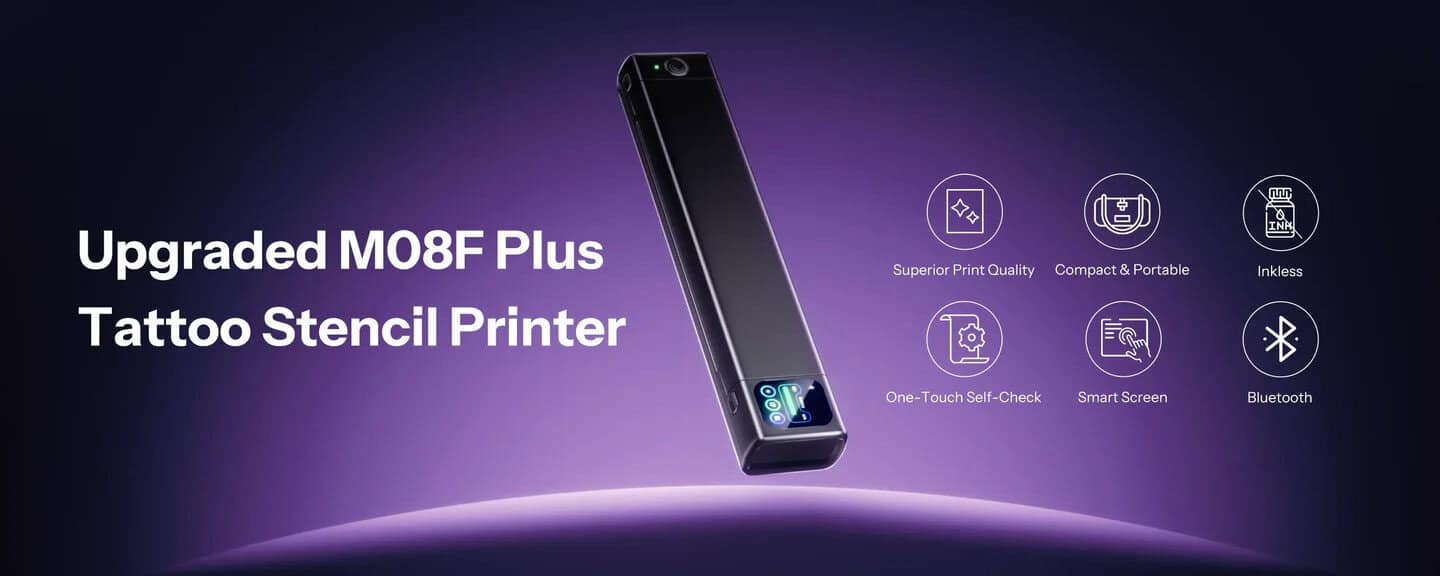
The printer uses direct thermal technology with 203 DPI resolution, delivering consistent stencil clarity while eliminating the need for ink or toner—reducing maintenance and keeping workflows cleaner in fast-paced studio environments.
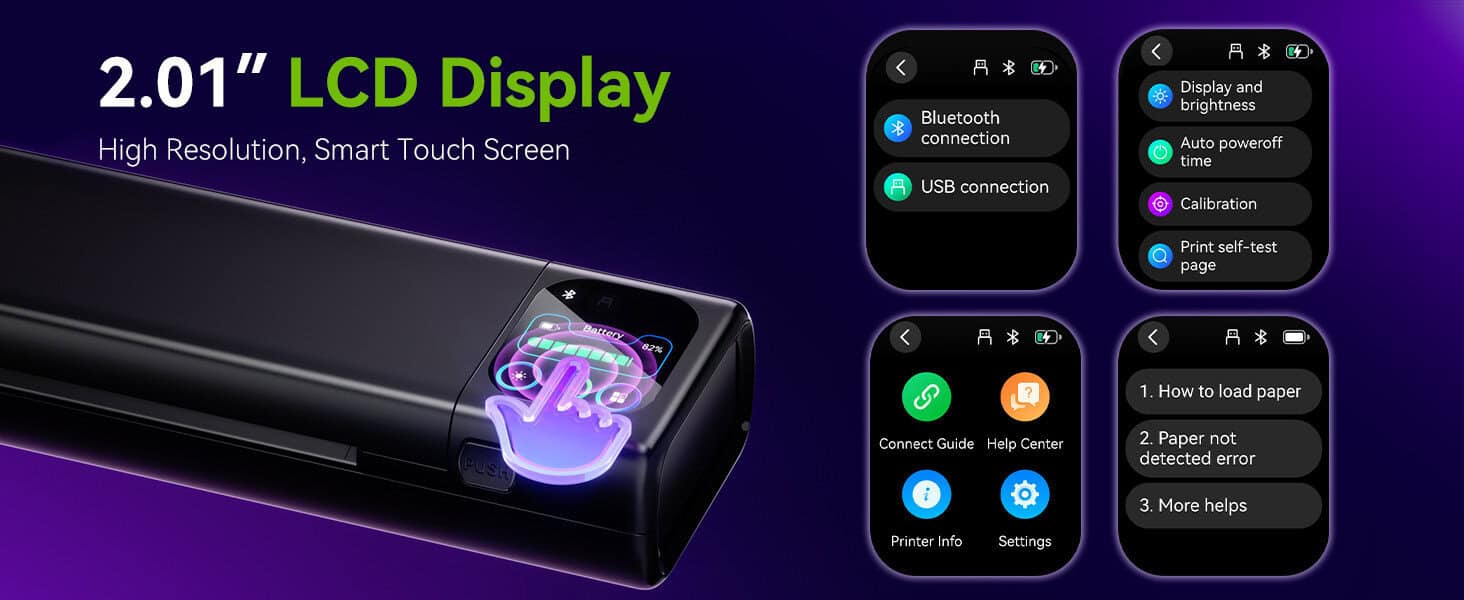
One of its more distinctive features is a built-in touchscreen interface, which allows artists to monitor battery status, connection, and print progress directly on the device. Additional functions such as calibration tools and self-test options help streamline setup and maintenance without relying entirely on external devices.
On the software side, the Phomemo app extends beyond basic editing, offering a more advanced design workflow powered by AI-assisted tools. In addition to contrast adjustment, line refinement, and layout optimization, artists can convert reference images directly into stencil-ready outlines, helping simplify complex visuals into clean, workable linework.
For original concepts, the app also supports AI-driven design generation, allowing users to translate simple prompts into tattoo-style compositions across multiple styles—from minimal linework to more detailed illustrative formats. This can be particularly useful during early ideation, when exploring directions with clients or building draft concepts quickly.
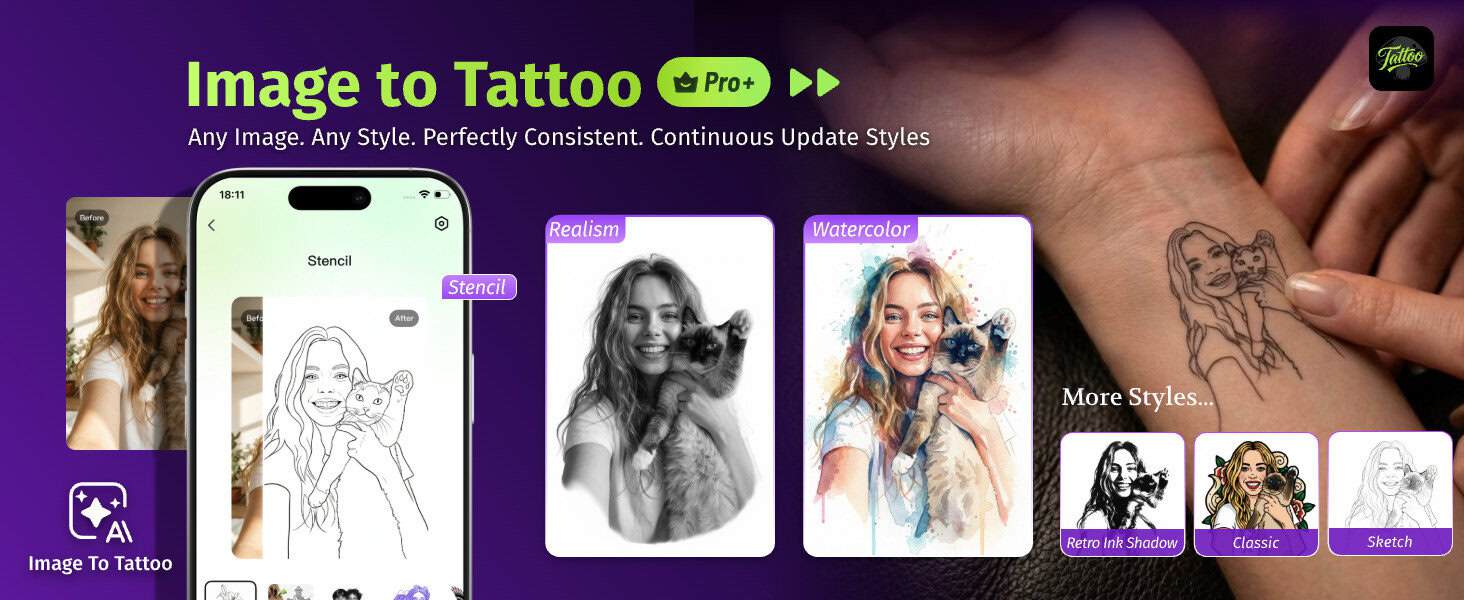
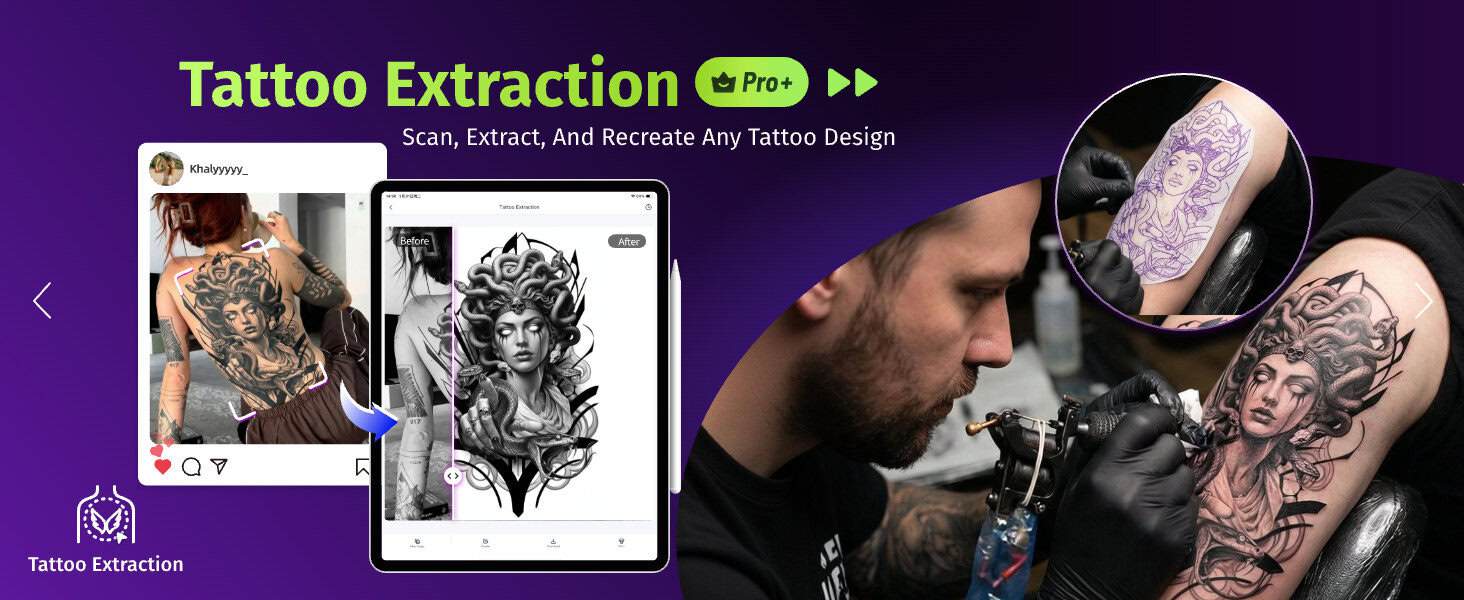
Another practical feature is image extraction, which allows artists to scan or import existing tattoo designs and isolate usable line structures for further refinement. Combined with automatic image splitting for large-scale designs, these tools help streamline the transition from concept to stencil, especially for multi-part compositions that require precise alignment.
From a hardware perspective, the device weighs approximately 1.6 lbs and includes a rechargeable battery capable of supporting extended use—up to around 140 pages per charge depending on usage. Combined with both Bluetooth and USB connectivity, it adapts well to different working setups, from studio stations to mobile environments.
Features like anti-wrinkle paper handling further improve consistency during printing, helping reduce errors and wasted materials over time.
Choosing the Right Tool for Your Setup
There’s no universal “best” stencil printer—only the one that fits your workflow.
Artists focused on intricate custom work may prioritize resolution and image processing tools. Those who travel frequently will care more about portability and battery life. And in high-volume studios, reliability and speed often outweigh everything else.
What’s clear is that stencil printing is no longer just a technical step—it’s part of the creative process. The best tools today aren’t just faster; they’re designed to reduce friction between idea and execution.
As tattooing continues to evolve alongside digital design, choosing the right stencil printer isn’t just about convenience—it’s about maintaining consistency, precision, and control in every piece you create.